Laser Engraving and Marking: Permanent, High-Contrast Results
Why Laser Med Tech for Laser Engraving and Marking: Permanent, High-Contrast Results
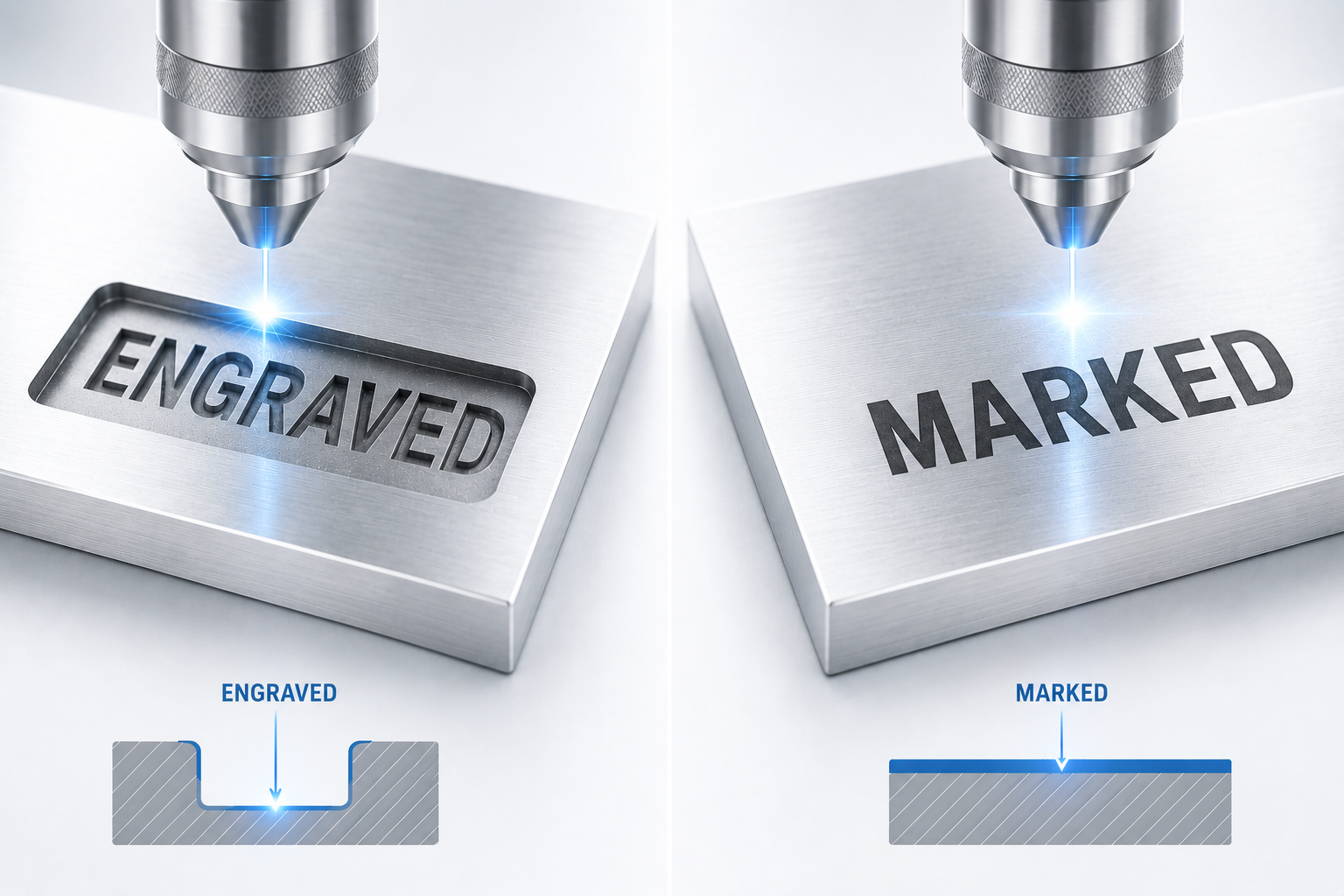
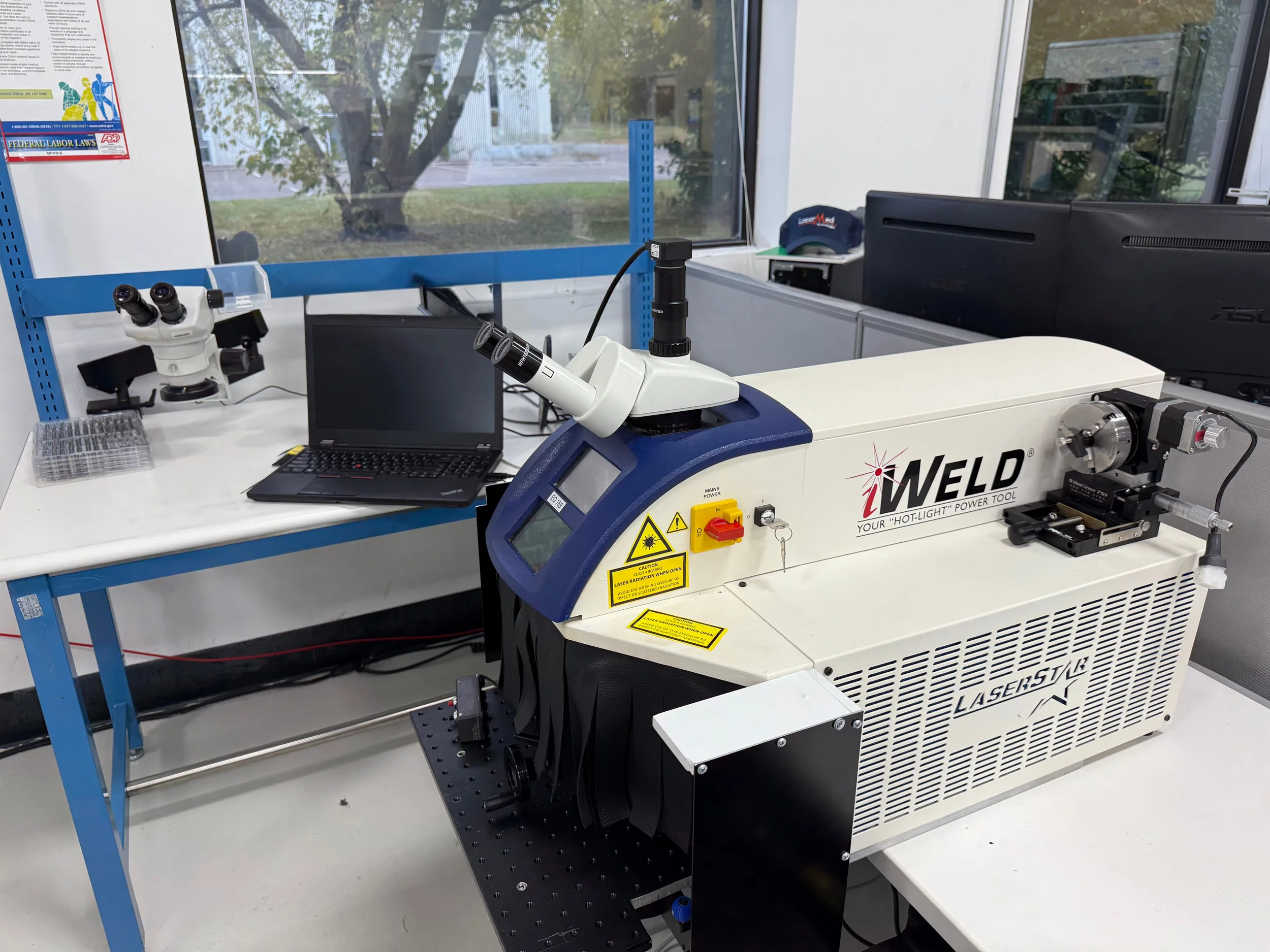
Laser engraving and marking aren't the same process, and the difference matters for your part. Engraving removes material like a chisel cuts wood. Marking fuses an oxide layer onto the surface like a welder lays a bead. Laser Med Tech has been running both processes for over 7 years, fully insured, on materials ranging from surgical-grade stainless steel to copper to Nitinol. If you need UDI-compliant device marking, high-contrast barcodes, or surface texturing that holds up under sterilization cycles, we can turn your files around fast. Call us directly at (612) 800-0784 or reach out through our contact page.
What drives cost and complexity on a laser engraving or marking job? Material hardness, surface finish, feature geometry, and whether the mark needs to meet a regulatory spec like UDI. A simple serial number on flat aluminum runs quickly. A photorealistic 3D texture engraved across a curved titanium surface at multiple depths is a different scope entirely. Our picosecond laser produces true cold ablation, which means no heat-affected zone, no discoloration around the mark, and no compromise to corrosion resistance on passivated parts. Pricing scales with run volume, material, and artwork complexity. Every job is different, so contact Laser Med Tech for an accurate estimate.
Have a project in mind?
Talk to our owners directly — same-day response.
Engraving vs. Marking: Two Different Physics, One Machine
People use these terms interchangeably. They shouldn't. Engraving physically removes material, cutting into the surface at a controlled depth. The laser acts as a chisel. Marking creates a chemical change at the surface, forming an oxide layer that produces a colored mark without removing measurable material. The laser acts as a welder.
That distinction isn't just semantic. Engraving changes part geometry, which matters on tight-tolerance components. Marking leaves the surface dimensionally intact, which is why it's the preferred method for UDI compliance on medical devices and aerospace serialization. Know which one your spec actually calls for before you send a file.
How Cold Ablation Actually Works
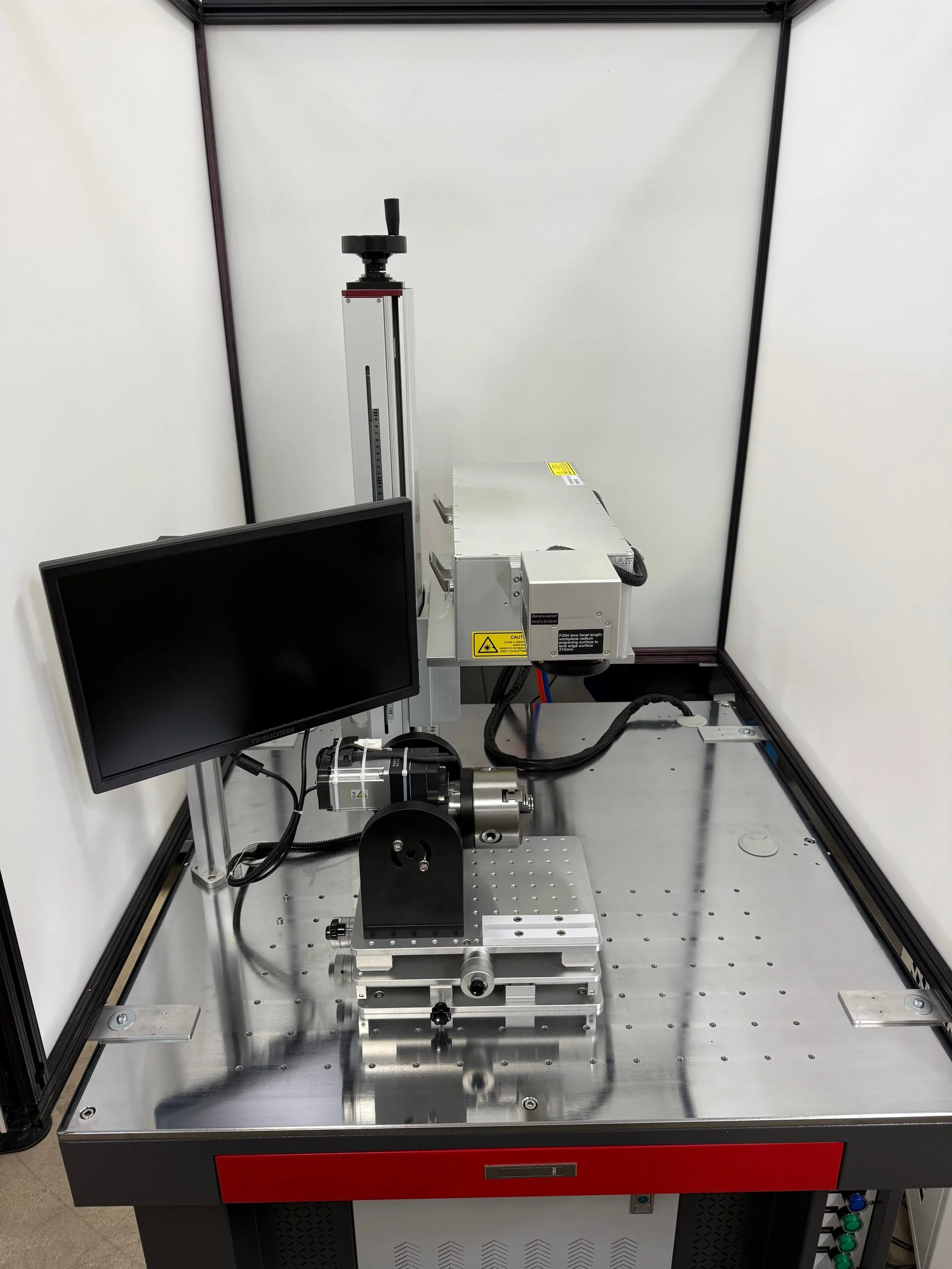
Standard laser marking deposits enough thermal energy that the surrounding material heats up. On stainless steel that might be tolerable. On titanium implants, thin-walled tubes, or semiconductor substrates, that heat is a defect, not just a side effect. USP laser pulses are so brief — we're talking femtoseconds, one quadrillionth of a second — that the lattice structure doesn't have time to conduct heat laterally. The material goes directly from solid to vapor. What's left is a clean, precise cavity with no recast layer and no discoloration beyond the mark boundary. You don't need to hand-polish afterward. You don't need a secondary passivation step in most cases. That's not marketing copy — that's physics, and it's why USP is specified by name in certain ISO and FDA-regulated manufacturing workflows. See how this integrates with our cleaning and passivation services when your process requires it.
Want it done right?
Precision laser processing on production timelines — call to scope your project.
Materials USP Marking Handles That Other Processes Can't
Stainless steel and titanium are the workhorses here — both are common in medical device production, and both respond well to cold ablation. Titanium in particular is sensitive to oxidation during marking; USP keeps the process clean enough that surface chemistry stays intact. Beyond metals, USP handles ceramics, coated surfaces, thin films, and certain polymers where a nanosecond pulse would burn rather than ablate. We won't run USP on every material that comes through the door — if a standard laser engraving process gives you the same result at lower cost, we'll tell you. But for heat-sensitive substrates or any application where the mark itself must not alter the surrounding material properties, USP is the right call. For complex part geometries, USP marking can be paired with precision laser tube cutting earlier in your production sequence.
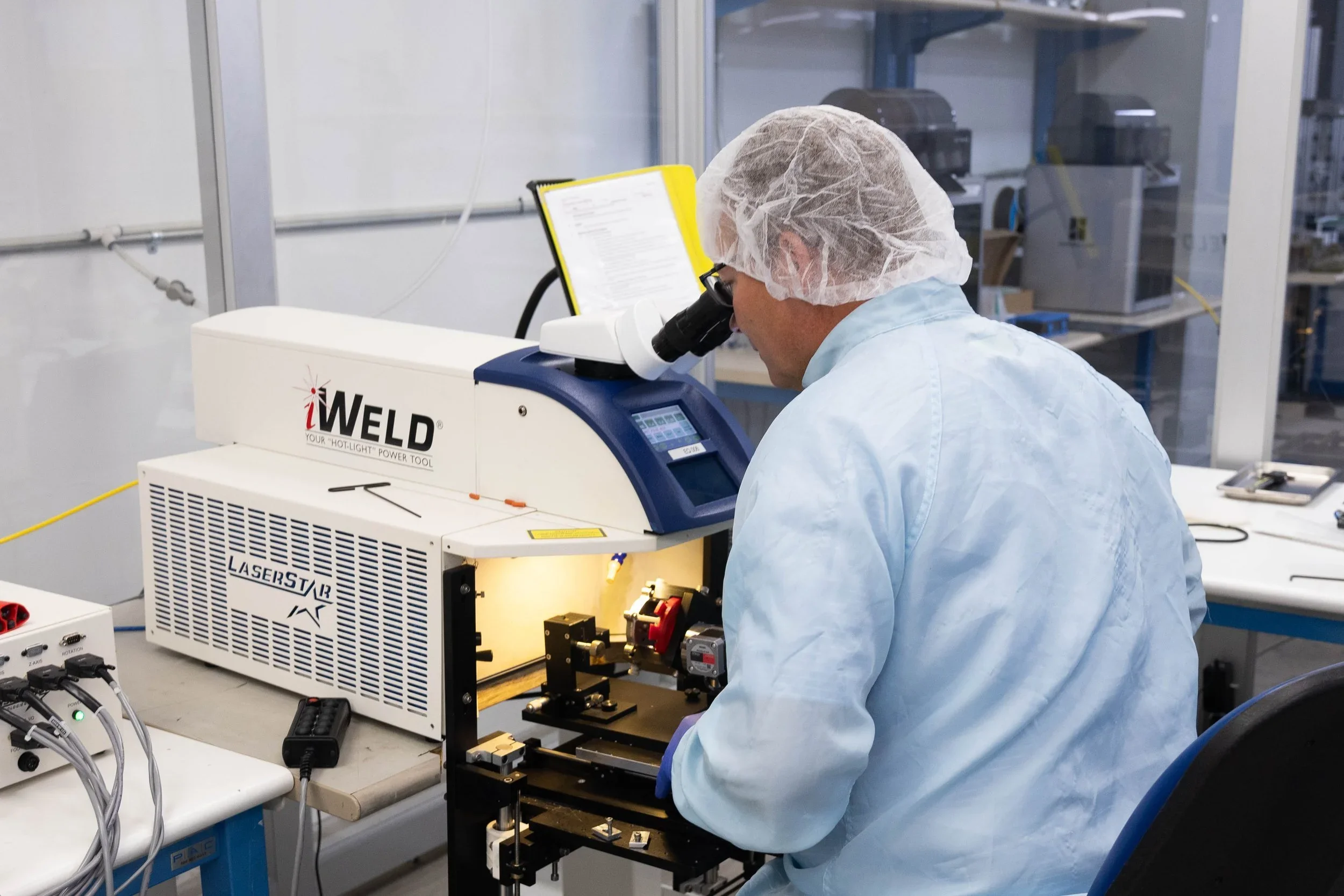
What Laser Med Tech Delivers on USP Marking Jobs
Permanent, high-contrast marks — readable by both humans and machine vision systems. Traceability features including UDI codes, 2D Data Matrix, serial numbers, and lot codes that meet FDA 21 CFR Part 830 and ISO 13485 documentation requirements for medical devices. Micro-marking on features that are physically small, with tolerances that hold across a production run, not just a first-article sample. We handle fixturing, process validation, and documentation internally — you're not coordinating between three vendors to get a compliant marked part. Owner Gary Graham runs the process directly. If you want to see what production-ready results look like before committing, check the product gallery. Reach out to our owners directly at (612) 800-0784 to discuss your application.
Want it done right?
Precision laser processing on production timelines — call to scope your project.
USP Marking vs. Standard Fiber Laser: When the Difference Matters
Honestly, for a lot of marking applications, a nanosecond fiber laser does the job fine and costs less per part. Don't let anyone sell you USP processing when standard marking meets your spec. The calculus changes when you have a material that's thermally sensitive, a surface finish that has to survive marking without a secondary operation, or a regulatory requirement that the mark must not alter corrosion resistance. Medical implants, aerospace fasteners, electronics with conformal coatings — those are the applications where USP earns its place. We also offer metal 3D printing and device assembly and packaging for teams that need more than just marking in their supply chain.
Production Workflow: From Sample to Full Run
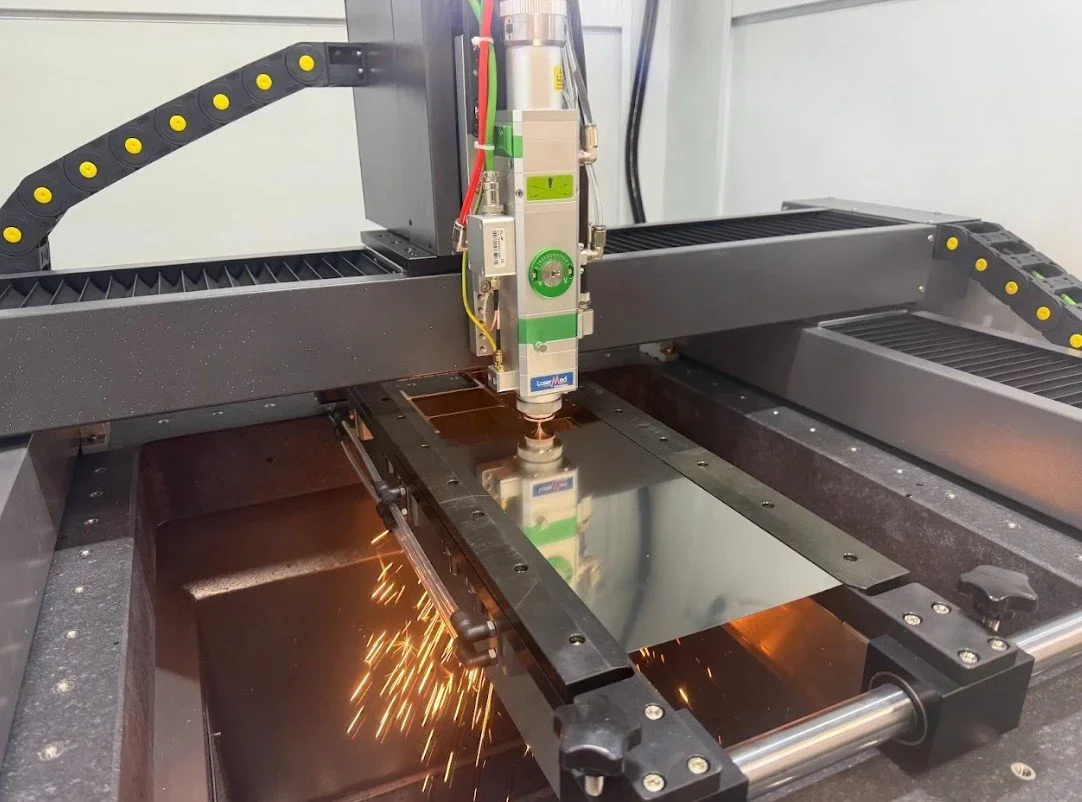
We start with a first-article review — your print, your material spec, your marking requirement. Gary reviews the parameters, we run samples, and you get documentation showing the mark meets your spec before we commit to production quantities. Rapid prototyping turnaround means you're not waiting weeks to validate the process. Once first-article is approved, we can scale to production volumes with consistent, repeatable results. For teams building out a full manufacturing workflow, our in-house tooling and prototype molding capabilities can support earlier stages of your development cycle. Read more about our facility and process at our facility.
Want it done right?
Precision laser processing on production timelines — call to scope your project.
Materials We Run and What Each Requires
Not every material responds to laser energy the same way. Here's what we routinely process and what it means for your job:
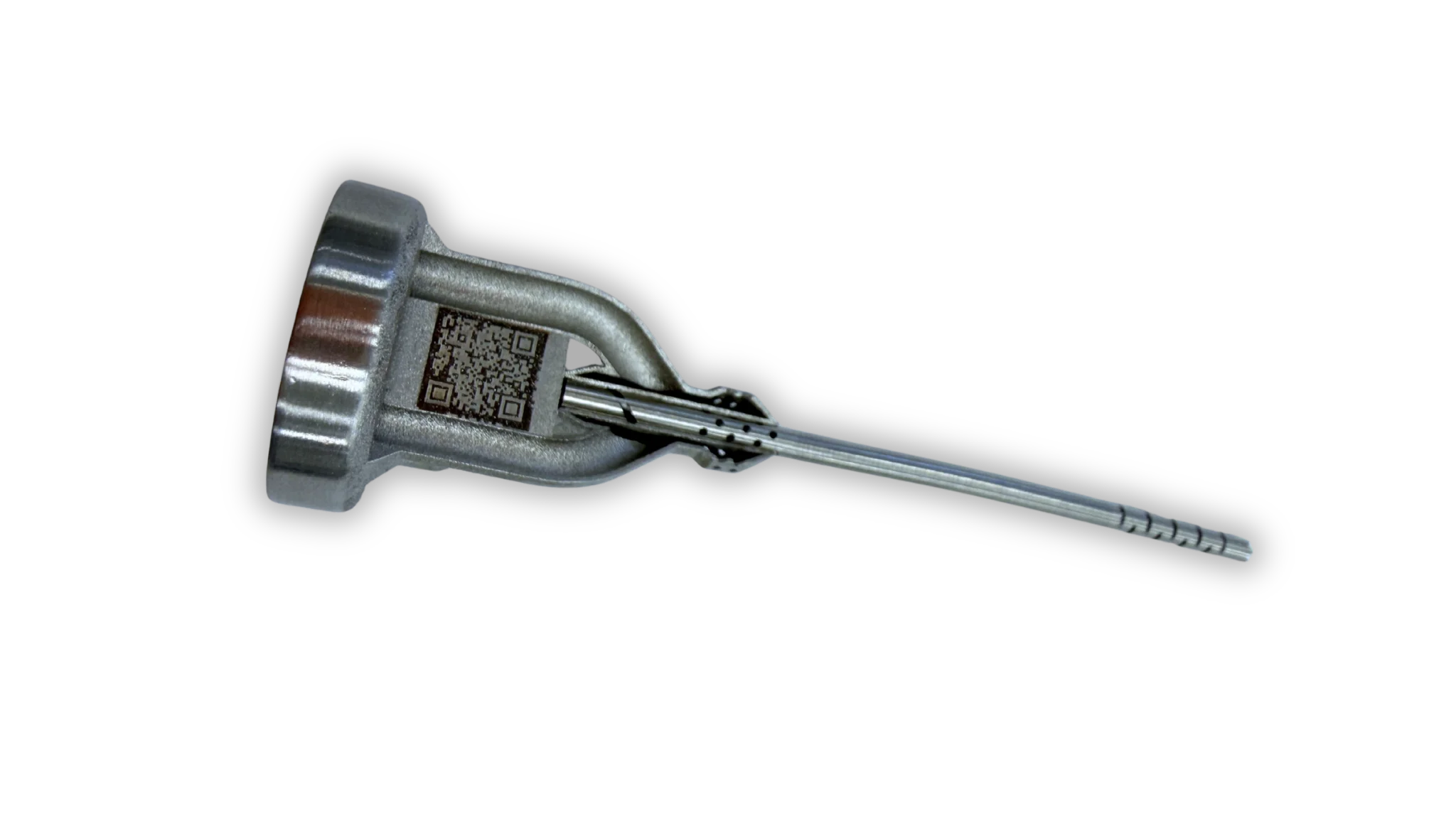
Stainless steel responds well to both engraving and oxide marking. Picosecond marking is preferred on passivated or electropolished surfaces. Titanium anodizes readily under laser energy, producing vivid color marks without any coating. Aluminum engraves cleanly but requires parameter control to avoid burring on thin walls. Copper reflects a lot of laser energy, so it demands higher power settings and slower passes. Plastics vary widely by formulation; some ablate predictably, others carbonize unpredictably.
If your material isn't on that list, call us. We've processed more substrate types than what fits in a paragraph. Our team can walk you through what's feasible before you commit to a run.
3D Surface Texturing and Complex Geometry
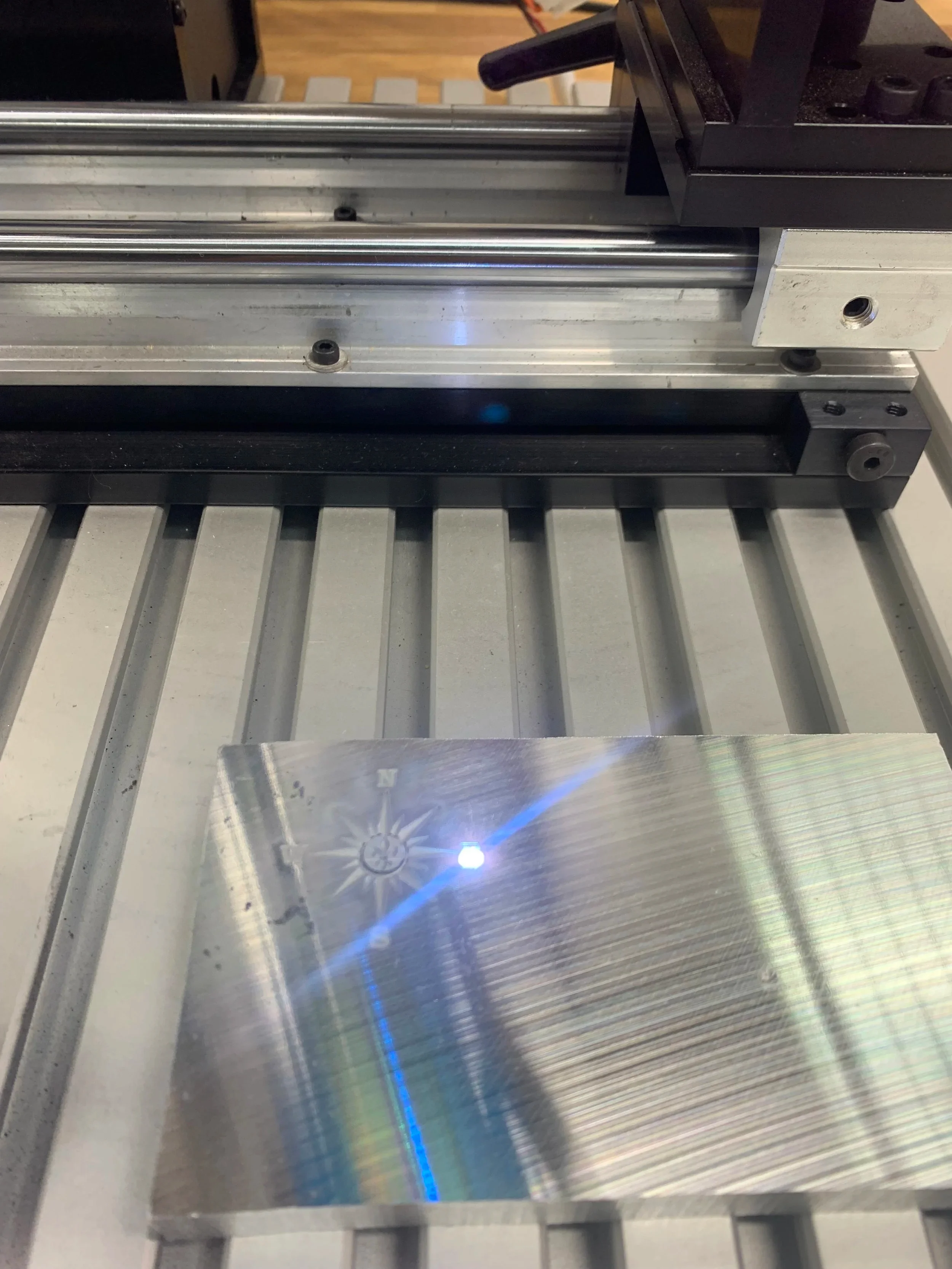
Flat engraving at a single depth is the simple case. We also do three-dimensional surface texturing: engraving a design into a part at multiple depth layers to produce a realistic 3D rendering or functional surface structure. This technique is used for mold texturing, anti-slip surfaces, and aesthetic branding on production components.
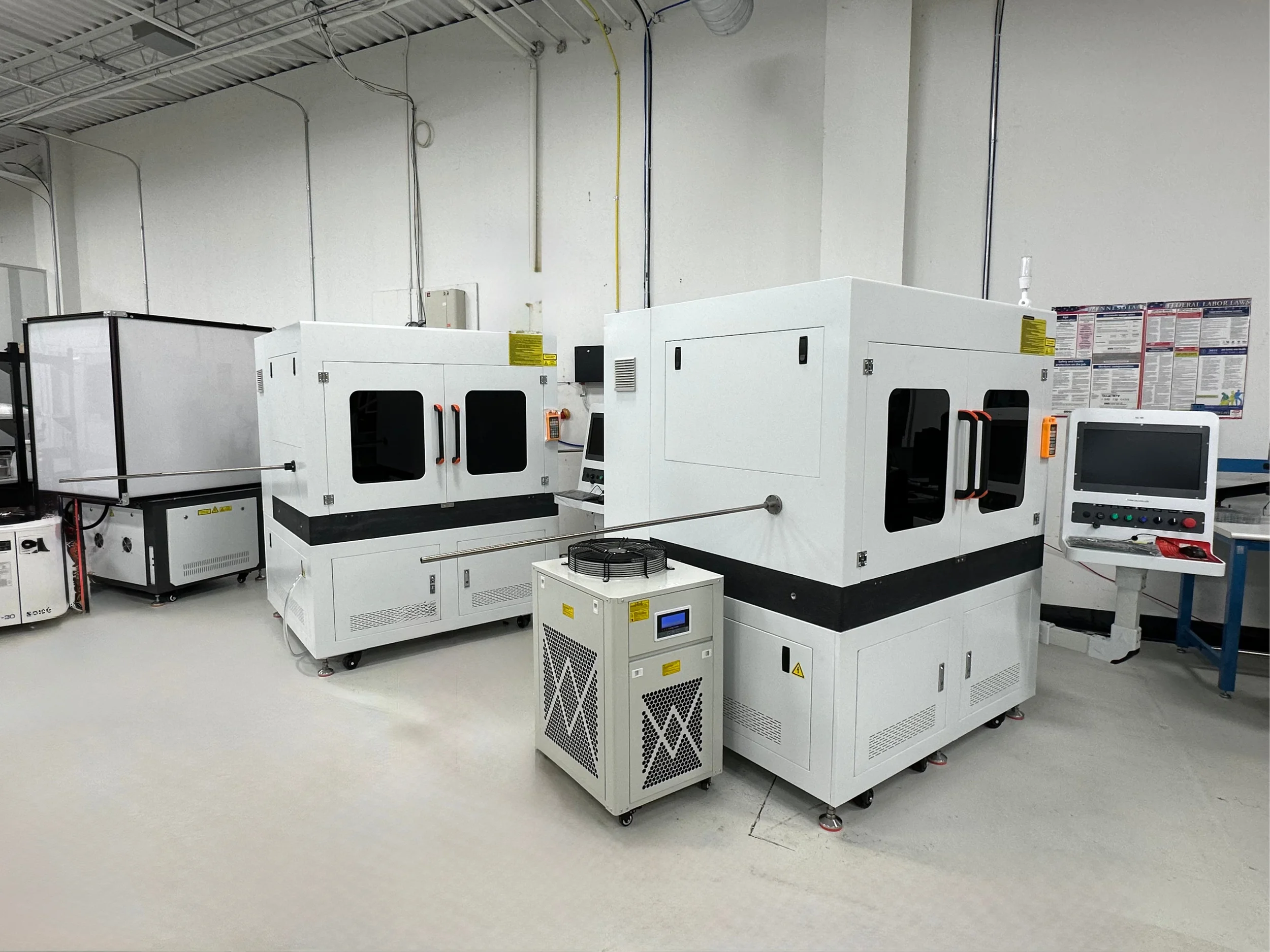
Combined with our precision laser tube cutting capability, we can mark or texture parts that aren't flat. Curved surfaces, tube ODs, and irregular geometries are all workable depending on part fixturing and feature size. If your CAD file has the geometry, we can usually find a path to mark it.
For parts that need to go from concept to marked prototype quickly, our in-house tooling and rapid prototyping capabilities keep the whole process under one roof.
Common questions
Still have questions?
Reach out to our owners directly — we'll walk you through it.
You might also be interested in

Assembly and Packaging
Learn more
Precision Cleaning and Passivation for Medical-Grade Parts
Learn more
Design and Product Development for Precision Manufacturing
Learn more
3D Printing and Rapid Prototyping for High-Spec Parts
Learn more
Custom In-House Tooling and CMM Fixtures Built Right
Learn more
Prototype Composite and Silicon Molding for Short Runs
Learn moreAccelerate your time to market.
Reach out to our owners directly. Rapid prototyping, precision laser processing, and production-ready solutions — on your timeline.